What’s the one weird trick for absolute success?

Oh boy! One weird trick!  Dermatologists hate me! Mortgage lenders curse my name! Why? Because I know the one weird trick that will help you, yes, YOU, pay off your mortgage, get rid of your wrinkles, reduce back and belly fat, and crack your script into shape to ensure total and immediate Hollywood screenwriting success in just minutes!

All of this is a gross exaggeration for comic effect, but you knew this, Gentle Reader. However, it’ll be interesting to see if my SEO skills result in some interesting search engine terms leading readers here.

Once upon a time, I knew a struggling actor, beginning playwright, and reasonably successful waiter. Just one? This one in particular, let’s call him Phil, had some bad networking habits. He was a schmoozer, and he was pretty good at getting into conversations about the business of making art with people more advanced in their career than he was. If you’re in any aspect of art-making, this will probably sound very familiar to you.

This is the guy he would usually bother. he has the patience of mountains, yet somehow Phil would still find a way to test it.
This is the guy he would usually bother. He has the patience of mountains, yet somehow Phil would still find a way to test it.

Inevitably, once some cheap wine or craft beer was flowing, and people were warming up, he would find whoever it was in the room that seemed to be the most advanced or successful in their career, corner them, and interrogate them, asking, “what’s the one thing, the one thing, the one piece of advice you can give me?”  By then his interrogation had driven away anyone else, and the interrogated would be shuffling and hemming and hawing, until finally they muttered something about perseverance, and said anything Young Torquemada wanted to hear so they could slip out of the conversation.

What was never clear (to me, anyway), was whether:

A) he only wanted to know one thing, because he didn’t intend to take up too much of their time with his request for professional guidance

or

B) he thought there was one secret to success, one ring to rule them all, which could be easily summed up in one simple weird trick, task, or dance move.

The reality, as anyone with half a brain knows, is that there is no one weird trick that will get anyone where they need to go. While it’s true that someone’s life can be ruined with one weird mistake or choice, getting where you want to go takes many steps, lessons, and actions over time. Very few people get this until they’ve learned it the hard way (myself included). That’s why I’m using a bold font. 

Me, waiting in a stairwell at the Temple Performing Arts Center, to go get my degree.

This past Thursday, I graduated with my Master of Fine Arts degree in Playwriting from Temple University.  It was crowded and hot and fun and thrilling, and a big vindication of all the hard work I’ve done over the past four years. Now I have a bunch of scripts, an MFA, a rail pass, and a copy of Writing Movies For Fun And Profit. I can take the train anywhere I want (at least through Sunday at midnight, and as long as I’m not planning to go past more than 2 SEPTA transit zones).

I also have a lot of new neural pathways burnt into my brain, from a four-year regime of writing, rewriting, reading, reciting, reiterating, re-reading, re-rewriting, researching, rehearsing, late nights, early mornings, too little sleep, too much coffee, and occasionally too much bourbon.  I’ve built some good habits and learned a few things. Which means I think now is the only time in my life that it’ll be fresh in my mind to address the question I was asked, back at the beginning of this process:

“Why do you need to go to graduate school to be an artist?”

IMG_2359
This is what I do. Not only do I make puppets, I sew berets and knit scarves for them.

It can be assumed that art is subjective, originality is more important than craft, that meaning is in the perception of the beholder, and maybe learning too many of the conventional rules of art-making can destroy creative impulses. Therefore, graduate school could, effectively, stifle real originality and creativity.  There’s the NYC vs. MFA debate (as if New York is the only city in the world where anyone does creative work and gets paid for it), where some people feel that rather than attending grad school, young people should get a job in their preferred industry and do it until they become successful.

Some of this is true. Some of this is not. I would make the argument that work and education need to co-exist. The ivory tower can insulate and stifle, and the working world can make you honest, but wear you down as well. You need both to improve as an artist.

Prior to applying to graduate school, I had a pretty good cultural education. I had worked in a lot of theaters where I had the opportunity to see world-class plays, music, dance, and whatever the Flying Karamazov Brothers are, for free, as long as I didn’t mind standing in the back. I heard Randy Newman play from the trap room underneath his piano, I saw the first production of Anna In The Tropics from 8th row center in a 300-seat house, I’ve been hugged by Dael Orlandersmith and kissed on the cheek by Tom Stoppard. For ten years, I absorbed all the culture I could, read tons of scripts,  and sold probably thousands of tickets and subscriptions.  Through this experience, I learned a lot about playwriting. Some of it I learned in weekly writers’ workshops and self-producing. Some of it I learned by seeing what shows were selected every season and where, and what wasn’t.

One does not simply walk into Mordor-blank
You’re thinking it. Right now. Yes, you are.

The biggest thing I learned is that if you don’t clean up real pretty, you don’t get asked to the dance. The competition for what I wanted to do was so fierce that if I didn’t have the MFA making me stand out, anything else that would was probably The Sarah Kane Solution.*

Right before I started graduate school, I was asked, “How is going to graduate school going to make you a better artist, something which relies on originality?” and I finally said, “I don’t know, but I have to try, because I can’t work the overnight shift at the big-box craft store for the rest of my life.”

So, here’s what I did learn in graduate school, how it changed me, and why I would advocate a mix of graduate school and “real-world” work in order to improve as an artist.

IMG_2046  First of all, as Polly Carl said, it’s a terrible idea to go directly from your undergraduate years into a graduate writing program. You need to go out and make mistakes and get scared in order to fully understand risks, stakes, consequences and motivation. Many playwrights who come from Ivy League universities produce scripts which suffer from the consequences not of the stakes needing to be higher, but the consequences of your protagonist not reaching their goal be a fate worse than death. If you spend your summers playing piano and tending bar in Brooklyn or Prague while reading poetry, or using the word “summer” as a verb in Cape Cod, you don’t know what a fate worse than death is. You need to get lost in very bad neighborhoods, and find your way home all by yourself.  You need to run completely out of food but still scrape up enough change to buy enough kibble to keep your cat alive. You need to work double shifts for a bad boss and too many customers and ache like you’ve been beaten with hockey sticks with no end in sight. You need to get so broke that you will do anything to get enough to eat, and then do that anything. You need to let time and tide and experience work on you. You need to learn the hard way who your real friends are.  Then, when you do get a good job, survive the night, see the sun rise, sink your teeth into that excellent meal, you need to let yourself feel real, heart-warming gratitude and pay it forward.  After all that, you’ll have something to write about.

IMG_2369  Secondly, it is true that graduate school insulates you from the “real world,” but this is a good thing. Effectively, it is a safe space to make creative mistakes. If you make mistakes in a job, you get fired, so you learn very quickly not to make mistakes. What you’re really learning is what your boss, client, etc. wants to hear or see. So, you might not create the most meaningful or affecting work, but you might create what gets you paid. Then you’re making the work that makes the groupthink happy and innovation doesn’t happen. Next thing you know, you’re buying up creativity books and going to seminars on “Five Highly Effective Ways To Think Outside The Box And Move Their Cheese.”

So, okay, yes, in grad school you get some playground time, and this is necessary in order to learn new ways of thinking.

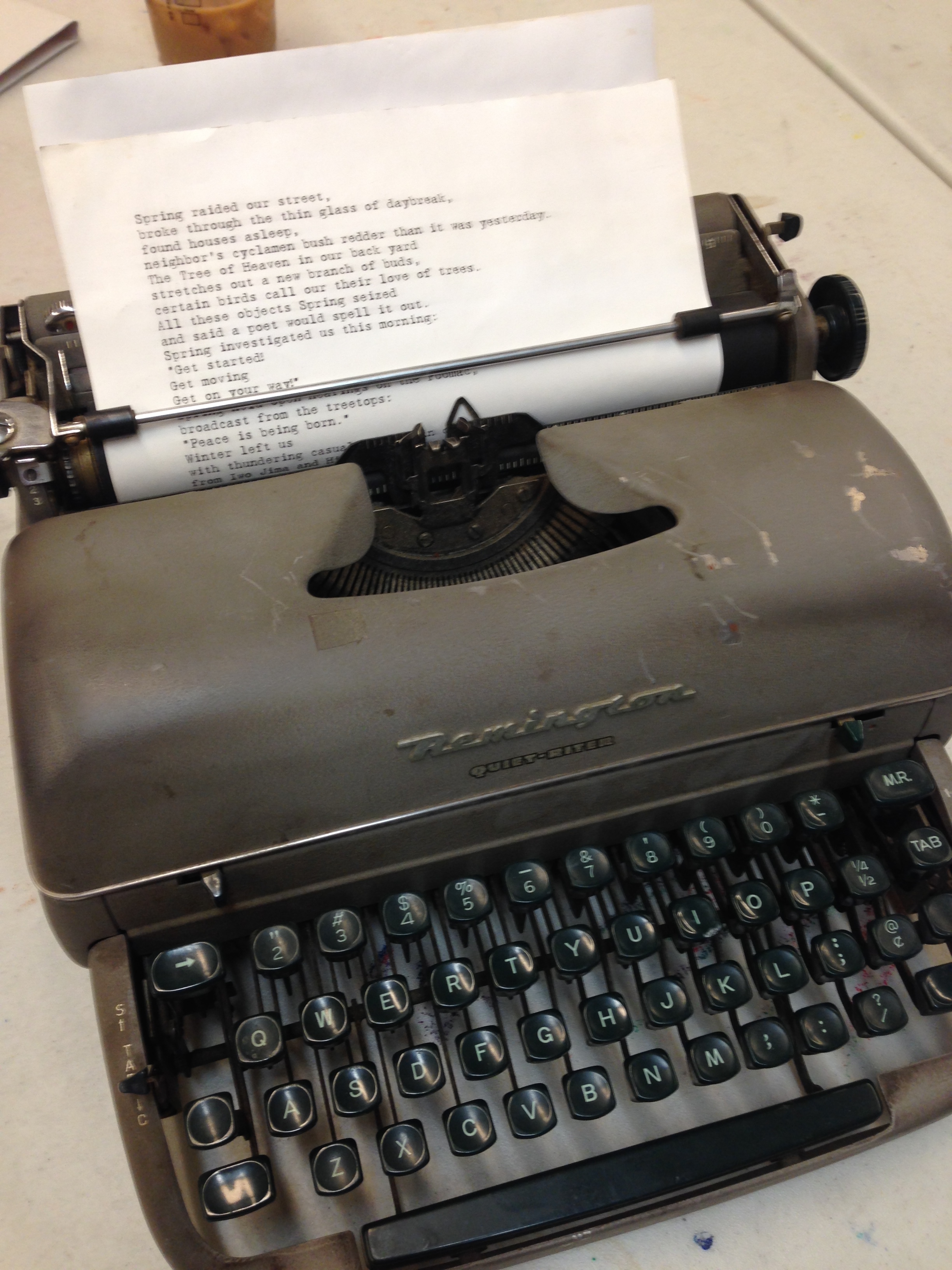
When I wrote plays back in 2009, I used to type drafts directly into my computer, maybe very rarely handwriting if I had to.
IMG_2365
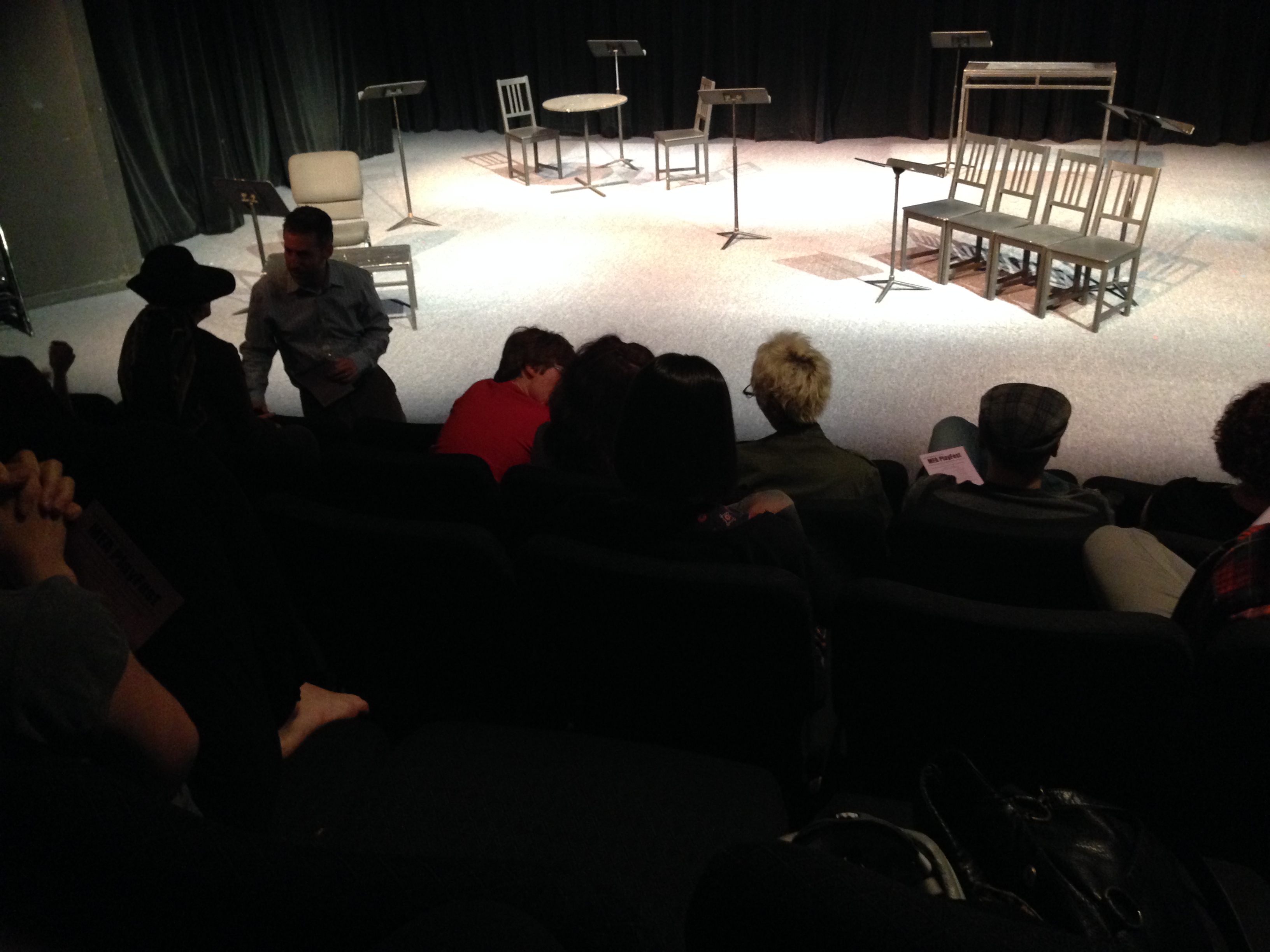
Just before MFA Playfest, May 9, 2014. Audiences are the best thing EVER.

Now, I storyboard and collage through idea generation, use a whiteboard through organizing my thoughts and structure,  type in Final Draft, and scribble throughout the process on paper. I also listen and talk out loud. I’ve traded various iterations of the same sentence back and forth with director Liz Carlson to find the right blend of craft and intention. We had a great time trying to figure out which was better, “lie back with your bed full of cupcakes,” or “lie back in your bed full of cupcakes.” I’ve done improvisation and used puppets to find new ways of telling a story. I learned from the most powerful brains in art-making fields, all with widely varied perspectives and methods.  If I had been in a for-profit work world, the opportunity to learn from leaders, make mistakes and try again would never have happened.

It’s true that Mark Foster of Foster The People honed his skills in commercial jingle writing, and John Hodgman sharpened his scholarly sensibilities as a literary agent.  However, these artists also were able to use grassroots and non-traditional media to create their own sandboxes. “Pumped Up Kicks” garnered its initial success via a free download on Foster’s website. Hodgman wrote a column for McSweeney’s Internet Tendency and now hosts his own podcast, Judge John Hodgman.

This dog has a frog. Were I cornered at a beer-and-cheap-wine fundraiser, by someone like Phil, and badgered for the “one weird trick to ensure success” (See how great my SEO skills are? You guys can stop spamming me now),  there would be a lesson I learned the hard way, to which I would refer.

In my second year of graduate school, I was working on a docudrama, which I grew to loathe. It dealt with a brutal murder, a woman falsely convicted via the court of public opinion, and her exoneration. The source material was so savage it gave me nightmares.** Writing this play was Not Fun Anymore.
IMG_2296  Now, if you have a situation where you work nine to five and make your art on the weekends and in the evenings, you can, and probably should, walk away from it when it’s no longer fun. If you’re doing it for love, and the love is gone, don’t stick with it. If you’re making a project for money, and you don’t love it, you’ll take the path of least persistence and do what the money wants. Client wants a beagle with mustard-colored ears on the label, you’ll make the beagle’s ears mustard-colored, even though you know caramel would be better. But, in this situation, failure to take this painful situation and not give it the honest illustration it required, would mean disappointment from people I admired, and in myself.  It would have been failure without honor. I needed to rely on craft to carry me through the emotional pain of this project.

IMG_2228  So, I dropped back, took a good look at the project, and thought about what it was that brought me to this project more than anything else. The idea of being tried in the court of public opinion was the one thing of which I could not let go.

I invented a new character, Lucky Moskowitz. Lucky is a 35-year-old lesbian who wears a lot of black, has black spiky hair, big blue eyes, and runs Lucky’s Gas n’Gulp out by the Interstate. She comes from a Chicago family of cops, but moved to the heartland to get away from a painful past with a mob-related former girlfriend (none of this ever came up in the play, but it sure is fun). Lucky gave me a means to tie together the disparate strands of the play and move the plot forward. Everybody comes through Lucky’s Gas n’ Gulp, and everybody’s got an opinion.  Lucky’s presence allowed me to look at the story in a new way.  The point is, eventually, you will hate a project so much that it is impossible to continue in the same way you always have. Then, you have to get perspective, and either find or invent a new personal point of entry into the work.

IMG_2363  Then you have to do it again and again and again, using the right tools and with the right people, until it becomes second nature. Then you have to forget all that, back up, take a good look, and just do it.

I don’t think an MFA alone is superior to real-world work, or vice versa. Neither is superior or inferior to building one’s own sandbox and using new technologies to find an audience. I think all these components have to work together. I do know that I’m definitely a better, more confident artist with more tools and techniques for play writing and screen writing now, after four years in the playwriting trenches at Temple University, than I was in 2010, left to my own devices.

Picard has had enough of your weird tricks.
Captain Picard has had enough of your weird tricks.

I believe that the one weird trick for absolute success is going out there and finding it for yourself.

That statement may seem like an oversimplification, and I don’t mean it that way. I could not have the portfolio of scripts, confidence, or neural pathways burnt into my brain without the teachers I had at Temple University, or the colleagues. I am deeply grateful every day for their work, skill, and talent.  What I mean is that the journey is the destination, and the goal is the work is takes to get there.

———————-

*Which would make a brilliant band name.

**I dreamt that I was employed by a tourism board to find all the haunted houses in a given area, witness the ghosts living out their own murders, write them down, and make it into a book to sell ghost tours. After describing the dream to my prof, Bob Hedley, he suggested I take a couple of days off from the work.

IMG_2228


Illness, health, and creativity

I know nobody’s looking at the Internet on a Friday evening in Spring (and if you are, please, step away from the screen and go enjoy some fresh air). But, I’ve had a cocktail, and since I haven’t posted anything here for a while, now seems like a good time as any to post.

Plague Doctor, Rome, 1656  I’ve been way underground for a while, and here’s why. First of all, I had the black plague. It’s possible I may be exaggerating for comic effect. I had pneumonia for a little bit over a week, probably a by-product of the weather vacillating wildly from warm to cold and back. In any case, I lost several days in bed manufacturing sputum of many colors. I learned something very interesting in the course of this illness.

If you take an SSRI, as many of us do (I think Zoloft will be OTC by 2020, but that’s just my opinion), you may want to consider its interaction with your over-the-counter cold medication, specifically, dextromethorphan (a cough suppressant). It clearly states on medications such as DayQuil and Mucinex DM that this medication should not be taken in conjunction with any medication that is an MAOI. I may be the exception to all of this, but, to make a long story short, the combination of dextromethorphan and sertraline resulted in a case of restless leg syndrome which should have made me eligible to join the Rockettes. Hence, what should have been a 5 to 7 day recuperation period stretched into 10 days because I had to take 36 hours with no medication which suppressed symptoms (other than antibiotics)  to let things get out of my system, which meant I couldn’t sleep. The moral of the story is, Cough Syrup Is No Joke.

Know your drugs, know your doses. It’s elementary.

But I digress. Here’s the heavy lifting which I’ve been doing this semester.

Walter Lowenfels  I’ve been writing a play about poet and journalist Walter Lowenfels. He lived in Paris during the 1930’s, hobnobbing with such literary luminaries as Anaïs Nin and Henry Miller. After the Depression hit, he returned with his wife, Lillian, to New Jersey, where he worked in his father’s butter business by day and wrote poetry by night. In the 1940s, he moved his family to Parkside, in West Philadelphia. There, he edited the Pennsylvania edition of The Daily Worker and was active in the Communist Party and the Civil Rights movement. In 1952 he was arrested for violation of The Smith Act, allegedly for trying to overthrow the government, and briefly held at Holmesburg Prison. The case was thrown out for lack of evidence; apparently the FBI does believe the pen to be mightier than the sword.

Lowenfels lived a multifaceted life, stretching between the demands of his family, his community, and his art. In the play created for my Seminar in Community Arts Practices, we’re exploring how he maintained that balance, via the metaphor of  his kitchen table. The play, Walter’s Table, will be presented as part of the Radical Jewish Culture symposium, at Paley Library, on Temple University’s main campus, on April 25 and 26. This production stars Philadelphia veteran actor David Ingram (most recently on the Wilma Theater stage in Cherokee).

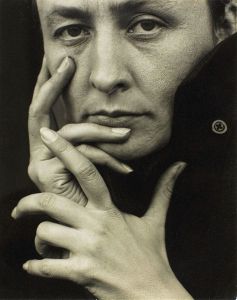
Georgia O'Keeffe, photographed by Alfred Steiglitz.  My thesis project is the real elephant in the room. The working title is Dream Of Wide Open Spaces. To make a long story short, from the fall of 1932 to the spring of 1934, Georgia O’Keeffe stopped painting. During that time she had a physical and emotional breakdown, lost all her appetite for creativity, and gradually found her way back to become the visual powerhouse we know and love.  As I’m working on this play, I am madly in love with The Beinecke Rare Book And Manuscript Library at Yale University, which holds much of Georgia O’Keeffe’s correspondence. Reading her letters in her handwriting, and interpreting the nuances with which she wields fountain pen or pencil is an adventure in and of itself. I’m also reading My Faraway One: Selected Letters of Georgia O’Keeffe and Alfred Steiglitz by Sarah Greenough, Portrait of an Artist: A Biography of Georgia O’Keeffe by Laurie Lisle, Georgia O’Keeffe by Roxana Robinson, and O’Keeffe and Steiglitz: An American Romance by Benita Eisler.

Black Hollyhock, Blue Larkspur, 1934

My process has been to read, read, and read, either before going to sleep for the night, or while on the train commuting, and then either sleep or go for walks, and let the data roll around in my head. Unfortunately, I know what it’s like to be creatively frustrated, as O’Keeffe was during that period, and what it’s like to be in a relationship with un-chosen non-monogamy. I also know what it’s like to be sick, and not to trust one’s own body,  and have to regain that trust. So I let things marinate, and then get up early in the morning and write what makes the most sense.

It’s a slow and painful process, but so far, I feel pretty good about it.

Coming up in the next month, Liz Carlson and I are banging our heads together again, for Temple University’s MFA Playfest. Liz will direct the play which I wrote as an independent study with Ed Sobel this past fall, The Wreck Of The Alberta. It’s a family drama about the weight of history, mental illness, puppetry and the secret life of objects. I love working with Liz, and our previous collaboration, Fox Haven was very successful, so this should be a good time.

Finally, if all goes well, I get to graduate in May. I will be wearing a cap, gown and hood made from the equivalent of approximately 23 recycled plastic bottles. I’m pretty tall, so let’s say 25.

So. That’s all the news that’s fit to print right now. Hopefully, I’ll make it through to the other side with two good scripts, and I can write about something other than balancing art with one’s mental health, someday. Right now I’m really feeling the experience of being on the fence between mentally healthy and productive, and crazy and frustrated. But, I’m walking the fence one step at a time.


Knock knock. Who’s there? Hamlet.

My brother, Ted, with some of the puppets he's made.
My brother, Ted, with some of the puppets he’s made.

Many years ago(okay, ten or so), my brother Ted asked me to write a script for him to perform with his puppets.

So I adapted Hamlet into a five-minute version for him. The script was lost, found, lost again, and now found again, so I’m putting it up here.

My father says it’s terrible, but he hates Shakespeare, and slept through the Lantern Theatre Company’s production of Much Ado About Nothing once (which Ted and I both loved), so this can’t be all that bad.  If you read this and it makes you laugh, great. Comments and feedback are all welcome.

If you want to perform this, with or without puppets, go right ahead. Let me know, because that would make me really happy, but please give me credit in writing for creating this adaptation.  Now I have to get back to reading and writing about Walter Lowenfels and Georgia O’Keeffe.

HAMLET IN FIVE MINUTES

OFFSTAGE VOICE:
Knock knock. Who’s there?
(GHOST puppet comes up.)
GHOST:
AWOOOOO!
(GHOST puppet disappears. Hamlet puppet comes up)
HAMLET:
I’m really depressed.
(HORATIO puppet enters)
HORATIO:
Hamlet, there’s a ghost on the balcony! Come see it!
(HORATIO exits)
HAMLET:
Sure, whatever.
(GHOST re-enters)
GHOST:
BOO-YAH!
HAMLET:
OH! Jiminy Christmas, Dad, don’t scare me like that.
GHOST:
HAAAAMMMLEEETTTT, my brother killed me and married your mother. Now he’s king and you’re not. Do something!
HAMLET:
Dad! You’re really upsetting me! Why shouldn’t I just lie around and slob out my trust fund?
GHOST:
Because I’ve got news for you, kid.
OFFSTAGE VOICE:
Knock, knock!
HAMLET:
Who’s there?
OFFSTAGE VOICE:
Fortinbras!
HAMLET:
Fortinbras who?
OFFSTAGE VOICE:
Fortinbras of Norway! I’m amassing soldiers on the border and we want baked Danish for breakfast!
HAMLET:
Great.
GHOST:
Hamlet! Do something with your life!
(GHOST disappears)
HAMLET:
Well, this sucks.
(POLONIUS enters)
POLONIUS:
What is the matter, my lord?
HAMLET:
Leave me alone, I’m trying to think.
POLONIUS:
Oh, tell me all your problems, I’m here for you.
HAMLET:
Really?
POLONIUS:
No.
HAMLET:
You know what? I’m crazy. Hopping mad! Boogedy-Boo! Leave me alone!
POLONIUS:
What are your intentions with my daughter?
HAMLET:
Your daughter?
(POLONIUS exits, OPHELIA appears, she is an adorable bunny rabbit)
OPHELIA:
Hi, Hamlet.
HAMLET:
Hi, Ophie.
OPHELIA:
Whatcha doin’?
HAMLET:
You don’t wanna get mixed up with a guy like me. I’m a loner, Ophie. A rebel.
OPHELIA:
Just wait till my brother finds out what a head case you are.
(she exits. CLAUDIUS enters)
CLAUDIUS:
Well, well, well, if it isn’t Hamlet. Still crazy and useless?
HAMLET:
If I stopped being crazy and useless, you’d have me killed, right?
CLAUDIUS:
Now, Hamlet, whatever makes you say that?
HAMLET:
Ok, Uncle Claude, I have a joke for you. Knock knock.
CLAUDIUS:
Who’s there?
HAMLET:
Guys that kill their brother, marry their sister in law and make off with the crown.
CLAUDIUS:
I don’t think that joke’s very funny, Hamlet.
HAMLET:
Neither do I.
CLAUDIUS:
Go to your room and stay there till I think of something to do with you!
(exits)
HAMLET:
How about if I go to Mom’s room instead?
(GERTRUDE enters)
GERTRUDE:
Hamlet, baby, why can’t you get along with your uncle and your stepfather?
HAMLET:
Mom. Don’t tell me that you cannot see how there is something completely, intrinsically wrong with that sentence.
GERTRUDE:
You always were a strange boy.
HAMLET:
No I’m not! I am not a strange boy! Look around you, Mom! Everything else is very, very messed up!
(rod puppet pops up of ROSENCRANTZ AND GUILDENSTERN)
R&G: (singing)
Oh, we are the boys in chorus, we hope you like our show, we’re really glad to be here, but now it’s time to go!
(R&G disappear)
HAMLET:
You see?
GERTRUDE:
Maybe you need some Ritalin.
HAMLET:
No.
GERT:
Prozac?
HAMLET:
No.
GERT:
Zoloft?
HAMLET:
No!
GERT:
Tofranil? Tegretol? Riseprdal? Ex-Laxx?
HAMLET:
No, no, no, no!
OFFSTAGE VOICE:
I’ll take some Ex-Laxx.
HAMLET:
Who was that?
GERT:
It must be a mouse because there couldn’t possibly be anyone spying on you!
HAMLET:
Ok, well, I’ll just stab the tapestry with my sword, then! Take THAT!
(rod puppet of DEAD POLONIUS appears. Eyes like X’s, tongue hanging out, etc. GERTRUDE exits, replaced by CLAUDIUS)
HAMLET:
So that’s what dead really looks like.
CLAUDIUS:
HAMLET! What did you do this time?
HAMLET:
Oops. My bad.
CLAUDIUS:
Congratulations! You’ve just won an all-expense-paid one-way trip straight to England!
HAMLET:
You know what? If it gets you out of my sight, FINE.
(Exeunt. OPHELIA, still an adorable bunny rabbit, but now a crazy, scary bunny rabbit, appears, singing to the tune of “I Met Him on a Sunday.” GERTRUDE sings backup)
OPHELIA:
I met him on a Sunday.
GERTRUDE:
Oo-oo-oo-oo
OPHELIA:
And his dad got killed on Monday,
GERTRUDE:
Oo-oo-oo-oo
OPHELIA:
Lost his marbles on a Tuesday,
GERTRUDE:
Oo-oo-oo-oo
OPHELIA:
Dissed me off on Wednesday,
GERTRUDE:
Oo-oo-oo-oo
OPHELIA:
Killed my dad on Thursday,
GERTRUDE:
Oo-oo-oo-oo,
OPHELIA:
Disappeared on Friday,
GERTRUDE:
Oo-oo-oo-oo,
OPHELIA:
I said, Bye-bye- Baby…
Doo ron, day ron, day ron, day ron, day, poppa doo ron, day ron, day ron, day ron, day poppa doo, oo-oo-oo-oooo.
Splish splash, I was takin’ a bath, long about a Saturday night, rub a dub, just relaxin’ in the tub, thinkin’ everything was all right…
(OPHELIA exits. HAMLET enters.)
GERTRUDE:
Hamlet! You’re back! Where were you?
HAMLET:
Well, I was going to go to England, but I changed my mind.
GERT:
What happened to Rosencrantz and Guildenstern?
HAMLET:
Oh, they decided to stay and hang out.
(Rod puppet of ROSENCRANTZ & GUILDENSTERN, dead Xs for eyes, tongues bugging out, nooses around their necks, pops up briefly, with a riff of “Rule Brittania” on kazoo.)
HAMLET:
Where’s my girlfriend?
GERTRUDE:
Oh, she went for a big swim.
HAMLET:
How big?
GERT:
Six feet under.
HAMLET:
Well, hope she reserves us all a good table and pre-orders the appetizers.
GERT:
I’ll bring the wine!
(GERTRUDE exits. a little skull on a stick pops up.)
SKULL:
Knock, knock.
HAMLET:
Who’s there.
SKULL:
Yorick.
HAMLET:
Yorick who?
SKULL:
Tag, Yor-ick!
(SKULL drops away.)
HAMLET:
I knew him.
(LAERTES pops up, mad as hell)
LAERTES:
HAMLET! I just got here from Paris-
HAMLET:
And boy are your arms tired.
LAERTES:
And everyone I love is dead!
HAMLET:
Boo hoo. Join the club.
LAERTES:
I’m gonna kick your ass!
(LAERTES exits, GERT returns)
HAMLET:
Good.
GERT:
Hamlet, your uncle brought some wine, wasn’t that nice of him? It’s got pearls in it! And it’s mighty tasty too!
HAMLET:
Mom, wait, stop, don’t you know what they say about pearls soaked in wine?
GERT:
No, that’s pearls before- GAK.
(she dies. Disappears.)
HAMLET:
Okay. Well, everyone that’s left I don’t like very much, so this should be easy.
(CLAUDIUS enters)
CLAUDIUS:
Hamlet, I’m betting on Laertes to pulverize you!
HAMLET:
Hey, Uncle Claude, guess what.
CLAUDIUS:
What?
HAMLET:
Never get in a fight with someone crazier than yourself.
CLAUDIUS:
What’s that supposed to mean?
HAMLET:
Look, a flesh-eating vulture.
(CLAUDIUS looks up)
CLAUDIUS:
Where?
(HAMLET head-butts him. CLAUDIUS dies, disappears. LAERTES pops up, holding a sword)
HAMLET:
Yeah, I learned that from Mel Gibson.
LAERTES:
Hey, Hamlet, wanna see my new sword?
HAMLET:
What’s so great about it?
LAERTES:
Well, your uncle gave it to me. It’s got deadly poison all over it. Tag, you’re it!
(whaps him with the sword)
HAMLET:
Oh well, I guess that means I have to kill you RIGHT NOW.
(HAMLET beats LAERTES up until he disappears)
HAMLET:
Ok. Well, I think that about wraps it up.
(HORATIO enters)
HORATIO:
Hey, um, Hamlet, someone’s at the door.
HAMLET:
Can it wait a minute? I’m dying here.
(HAMLET slumps, dead, over the puppet stage. FORTINBRAS enters)
FORTINBRAS:
Knock knock.
HORATIO:
Who’s there?
FORTINBRAS:
Norway.
HORATIO:
Norway who?
FORTINBRAS:
There ain’t Nor Way that Denmark isn’t mine, all mine! Hah hah hah!
HORATIO:
And I alone am escaped to tell thee, “The End.”

END OF PLAY

I also have to add: This play is much, much funnier when Ted performs it. He reads so fast that you can only understand about 60% of the words, but the intention is clear, and the enthusiasm and determination are like a galloping horse toward Horse Heaven. It’s like Andy Kaufman breaking a land speed record.

First prize: Seven Days in Minneapolis

Tiki God on the outdoor deck at Psycho Suzi's Motor Lounge, Minneapolis, MN
Not an actual Wendigo.

A weeknight in February is not when you most want to be standing on the side of a road, in the dark, alone, in Minneapolis. Local temperatures were less than a respectable grade point average and nearing a blood alcohol count. For the first time, I opened the compass on my phone and used it for its intended purpose. It might seem strange, but for a playwright, I was in the best place I could possibly  be: on my way to the Theatre Pro Rata play reading series.  How does a cheesefake-eatin’, “yeah-yeah” sayin’, angry young Philly Playwright end up waddling like a penguin through the hip-high snow canals of Minnesota?

producing: Theatre Pro Rata www.theatreprorata.org photo: Charlie Gorrill http://leonardgorrillphoto.smugmug.com/
producing company: Theatre Pro Rata
http://www.theatreprorata.org
photo credit: Charlie Gorrill
http://leonardgorrillphoto.smugmug.com/

Theatre Pro Rata is the company which produced Traveling Light back in 2010, in Layman’s Cemetery, as noted by American Theatre Magazine. To this day, in Minneapolis, it’s known as “that play in the cemetery.”  So, yeah, they know me there. Artistic director Carin Bratlie and I met through an online craft community. We bonded over a shared love of knitting. I stalked her because she was working on a production of Quills, and I was fascinated with her process of building a distressed corset.  Over time, she saw what and how I write, drafts were exchanged, and the rest is full-cemetery history.

That 2010 trip whetted my appetite for the Twin Cities. Vince and I fell in love with the mild July weather. The mosquitoes they complained about didn’t seem like much. The food, architecture, and intelligent small businesses in Uptown were all enough to make the city great on its own, but the people were what really lured us in.

Saint Paul's Cathedral, St. Paul, Minnesota
Cathedral of Saint Paul, St. Paul, Minnesota

One evening we were standing in front of a public map looking for the nearest bus stop.  A woman in a floral print dress walked past us, stopped, came back and asked, “Did you need any help finding something?” My jaw practically hit the ground. I blubbered, “Wh-wh-wh-whaaat?”  I did notice that around her neck was a silver St. Christopher’s medal, so maybe she had a particular need to assist travelers. Maybe I’m jaded and need to look into a softer suit of armor. But, in general, the kindness and politeness of Minnesotans is humbling.

Theatre Pro Rata has a history of creating thought-provoking theater with a high standard of excellence.  They are what I think most people would call a small-budget theater company, but they pack tremendous impact onto the stage. Their mission indicates that they create plays which cause you to think about and discuss them long afterwards. I loved working with them so much that I keep trying to crack the code of “what is a Pro Rata play,” because the work they do is the kind of things I want to write.

The commonalities are that the conflict is specific and immediate, with resonance in the present, even if the play takes place long ago and far away.  The plays they choose seem to be ones that show the best and worst about the human condition, and how these two are often interchangeable.

producing: Theatre Pro Rata www.theatreprorata.org photo: Charlie Gorrill http://leonardgorrillphoto.smugmug.com/
producing company: Theatre Pro Rata
http://www.theatreprorata.org
photo credit: Charlie Gorrill
http://leonardgorrillphoto.smugmug.com/

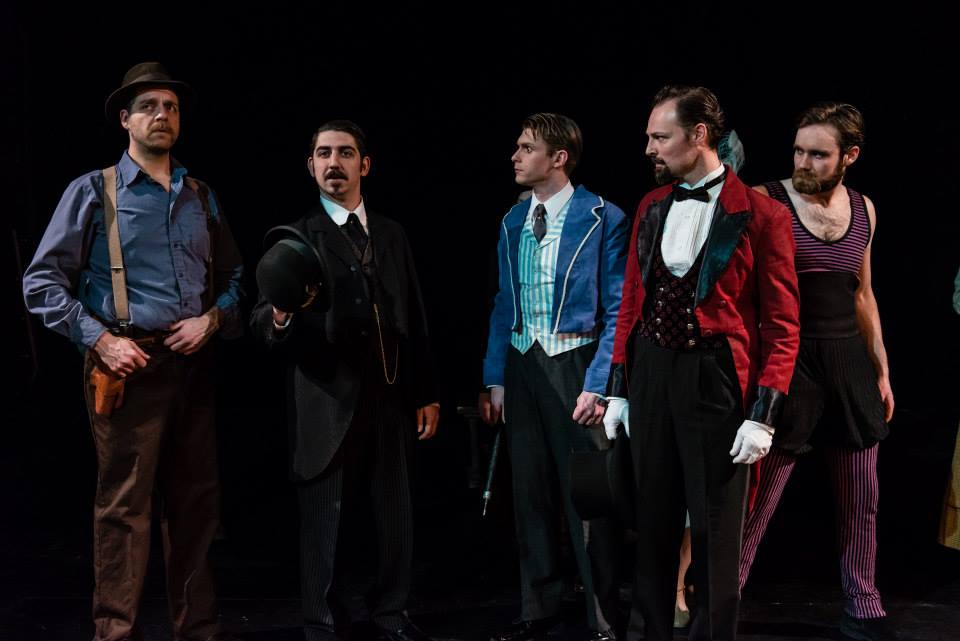
For example, in their most recent show, Elephant’s Graveyard by George Brant, the joy and dazzle of a circus is contrasted with the simplicity and pragmatism of small-town life. However, the hunger for artifice and desire for spectacle, inextricable from the human condition, fuels but ultimately undoes anything beautiful about either side. Director Amber Bjork placed Brant’s script in a minimalist arena, where the characters, conflict and language are the entire show. Two musicians played tunes created by music director Theo Langason on a platform, echoing the heat and pulse of Tennessee in the summer. One string of lights showed the glitz of the circus tent.  Julia Carlis’ subtle and powerful lighting design caused many people to think, at times, that they saw the actual elephant (never onstage, but certainly felt).  Every other element of this heartbreak was brought in by the performances of the excellent cast and the flawless costumes by Mandi Johnson. By the end of the play I felt like I’d been punched in the sternum, had the breath sucked out of my lungs, and then had taken the front seat of the roller coaster straight down hill; like I’d just fallen in love. This is exactly how theater should make you feel.

producing company: Theatre Pro Rata www.theatreprorata.org photo credit: Charlie Gorrill http://leonardgorrillphoto.smugmug.com/
producing company: Theatre Pro Rata
http://www.theatreprorata.org
photo credit: Charlie Gorrill
http://leonardgorrillphoto.smugmug.com/

Amber took me to the Minnesota Fringe Lottery, which was a huge affirmation of how theater can be done and something FringeArts could stand to learn. In exchange for an application fee of $25, you and your production company receive a lottery number. At an event in a theater space, ping-pong balls containing numbers are drawn, charted, and the entire festival, for all size venues, is selected.

If your number is selected, you pay a production fee, and get “venue rent for five performances, technical and box office staff, a listing in the printed program, a customizable show page on our website, lots of producing training and at least 65 percent of the box office receipts.” Essentially, they do the hard stuff.  You do the fun things that are the real reason you went into making theater in the first place.**

That’s it.  The playing field is level. It’s easier for audiences to find shows and plan their Fringe-watching schedule. The selection process occurred  in a party atmosphere (Brave New Workshop Student Union, with a bar and a popcorn machine), and most companies tentatively titled their shows, “TBA.” That atmosphere of “let’s all get together and make a big experiment” seems to last through the summer into August; supportive and deliberately collaborative. Companies don’t have to compete for audiences, space, or reviewers’ time.  It is true that in some ways it’s more restrictive; your show can not run longer than 60 minutes, your venue and performance times are assigned.  But, if you want to do a site-specific Coriolanus in your local laundromat at dawn, they have an application process for that too. It honors the camaraderie and experimental nature of theater and provides structure to foster growth, while making it easier for audiences to experience.

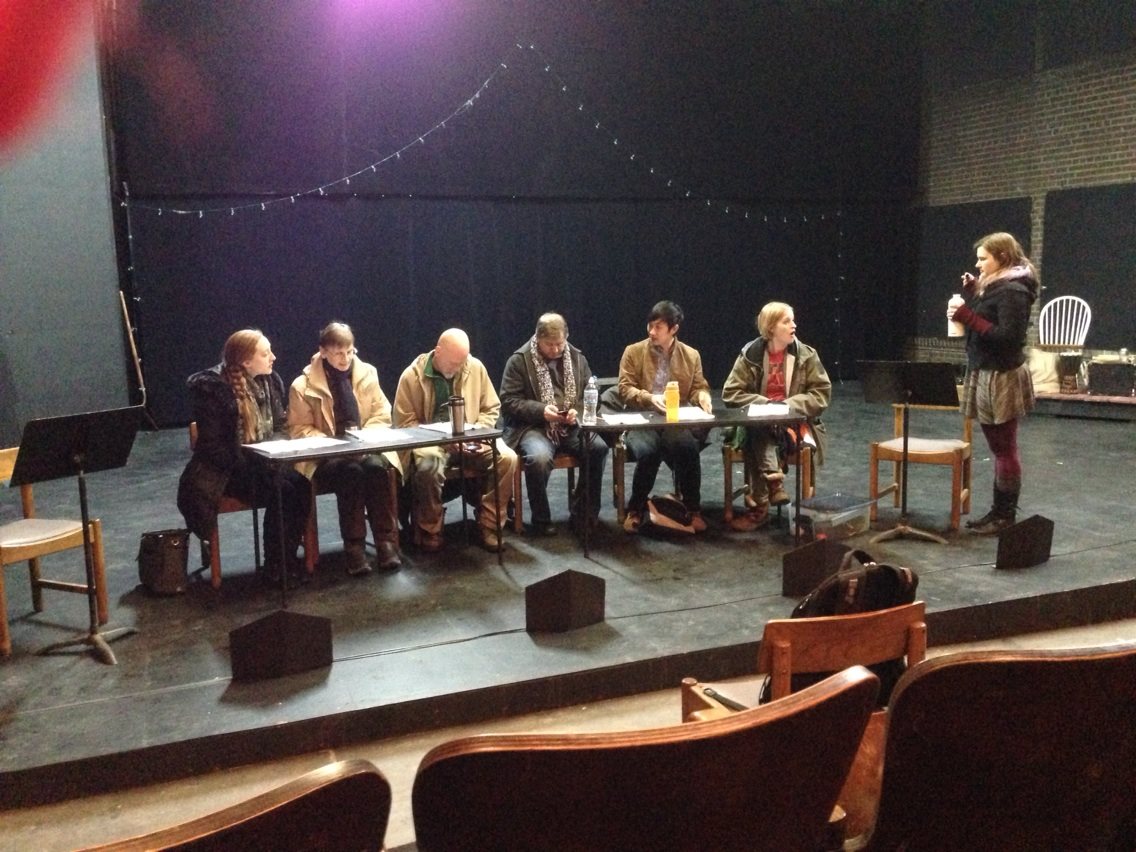
Table reading of Fox Haven, by Theatre Pro Rata at Theater Nimbus, Minneapolis, Minnesota

The reading of Fox Haven was extremely helpful for me. Since its reading in last spring’s MFA Playfest, I’ve revised the end and beginning. While the reading last time was a complete success, in this case I was able to hear it with actors closer in age to the characters.  The feedback they gave me was specific and clear, and, as always, working with them was not only productive but also a joy.

Como Park Conservatory, St, Paul, Minnesota  As a cultural haven, Minneapolis is just so seductive. The city manages snow and cold as well as Las Vegas manages heat. Indoor spaces are well-insulated, streets are efficiently cleared, and there’s a strong sense of hygge, the idea of getting together with others and enjoying social time to stave off adversity. This probably contributes to the strength of their cultural scene; they don’t hibernate at home, but go out to see shows, experience museums, conservatories and architecture. Their Uptown district has theaters in similar density to how most cities have Starbucks.  Not only is there audience demand for the arts, but also there’s government and corporate funding.

The mind-blower for me was The Interact Centre.  It’s an arts organization which includes a licensed day program so that people like my brother Ted can attend five days a week and work with artists on the art they need to create most. I know of no other program like this. It would be perfect not only for Ted, but for so many artists to work in. We know that arts and education make cities a destination and promote economic growth by leaps and bounds. Why this isn’t happening like this in more cities, I don’t know.

Psycho Suzi's Motor Lounge, Minneapolis, MN
It’s always in the fine print.

Getting back to the Shackleton experience. Needless to say, between, Siri, my compass, and my sketchy sense of direction*,  I quickly found Theater Nimbus, the location which Theatre Pro Rata was using for their production of Elephant’s Graveyard, and joyfully stumbled into the welcoming warmth they provide. On the whole, the entire experience was an intellectual and emotional health spa. Prior to this trip, my seasonal affective disorder was turning me into a slug, but now I don’t feel so cold. My purpose is definitely renewed.

Now if I can do something about the seven pounds I gained from their terrific restaurants, everything will be fine.

————

*All right, I’ll admit it. My secret teenaged mutant ninja x-men power is getting lost. If Magneto ever captures me and demands to know where Professor Xavier is, I will hold up under torture as long as possible, and then gasp, “Fine… you win…  I’ll take you to him…. we wanna get on the turnpike.” Thus providing a distraction long enough for the others to get through makeup and so on.

**I am wrong. I know some people really did go into making theater because they love sweeping aisles between bolted-down theater seats, running sales reports, applying for insurance, or calling cues. Those people should be saluted, honored, and the rest of us should get out of their way.

Free story writing advice, some of it might be good.

Pen and handwriting on paper to indicate this post is about writing.
In every post about writing, there is always a photo of a fountain pen and a piece of paper with handwriting on it. However, I know very few people who use fountain pens and hand write frequently. But, nobody would know this was a post about writing if I didn’t use this image.

Lately I’ve been reading a lot about what constitutes good storytelling, in playwriting and screenwriting, and what I’ve read has seemed to miss the point. I’ve also seen some really bad plays lately, and life is too freaking short for bad plays. There seems to be a lot of “make stuff happen” or vague metaphors trying to describe it, and nothing about simple, basic tools of storytelling.  I don’t know if this is because somebody wants to make money leading writing seminars while simultaneously pulling the ladder up behind themselves, or if they just can’t explain it well, or if I don’t understand them (and by now I should).  Anyway. Here are a couple of things which I have learned, which no one else has been able to explain to my satisfaction.

The best place to start is with your main character, what they want, and what’s in their way.  A really simple formula is this, which I learned in a writing class from Doug Wright:

Blank wants blank in order to blank, but is thwarted by blank and ends up blank.

I apologize right now for the phrase, “is thwarted by.” I know it sounds archaic and pompous. However, it’s hard to come up with a phrase that means exactly that.

To try to illustrate, let’s make a simple image. People in general get really excited about sports, because sports offers the simplest possible version of this narrative.

Football players, tackling on a snowy field.   Football player #88 wants to get the ball and run down the field to make a touchdown, but is thwarted by the other team’s player #66, who body-slams him to the ground ten yards from the goal line, and ends up injured.

To expand this somewhat, you can also say, Football player #88 wants to get the ball and run down the field to make a touchdown, in order to win the game and get the endorsement with a major soda company which will pay off the mortgage he has on the fabulous mansion he can’t afford, so that he can squash his memories of his tortured childhood growing up in a roach-infested apartment, but is thwarted by the other team’s player #66, who body-slams him to the ground ten yards from the goal line, and ends up with a broken collarbone.

But, when you’re starting, you want to keep things really simple. It’s easy to think a lot about the larger goal, because that gives us the why, and backstory is always a fun place to dawdle around in storytelling. But, when you’re getting started, especially when you’re writing a screenplay or a script, because they take place in the here and now.

So, you should take a blank piece of paper, and your favorite color magic marker, and hand-write in big letters,

_____ wants _____ (in order to _____) but is thwarted by _____ and ends up ____.

Put this on the wall over wherever it is that you write.

If you want to get academic about this exercise, Romeo wants to marry Juliet in order to experience perfect physical and emotional bliss, but is thwarted by the hatred between their respective families, and ends up dead.

Broad strokes. Keep it easy. Here’s a simpler one:

Phaedra wants to have sex with her stepson Hippolytus in order to experience perfect physical and emotional love, but is thwarted by Hippolytus’ disgust for her and ends up committing suicide.

Now, Hippolytus has his own set of issues, goals and obstacles, as do The Capulets and Monatgues, and as does Football Player #66, if your story is even close to interesting. Eventually, you will want to write out this formula for all of your characters.

Now, I know that we all love stories with huge ensemble casts of characters, and there is a lot to be said for ensemble stories. However, if you look at the story closely, you’ll see that the most successful ones center around one protagonist, and although the other characters have goals and obstacles and stories of their own, the story really follows this one character.

An example of a novel which translated reasonably well to film is Wonder Boys. It has a fantastic ensemble of characters, and their interplay is what mades the story so rich and exciting. So, one could argue that this story depends on ensemble and less on a protagonist.

To which I would say, bullshit. There are points throughout the story where Grady Tripp could have just walked out, gone home, and, as Michael Chabon said, “lie on the couch, watch reruns of the Rockford Files, roll numbers, and wait for the girl in the black kimono to take me away.” However, the journey of all the other characters would wind down and burn out as a result, if Grady didn’t stop moving forward toward his goal, which is to restore order to the chaos his life as become. Grady’s self-hatred would be consistent with him going home, smoking weed and watching tv until he died as a means to bring order to chaos, but no one else would be put in the places they need to be as a result. He needs to cause all the things which make the other characters get where they belong.

So, Grady needs to return missing things to their proper places so that he can get himself into the right family, but comes up against the chaos of a writer’s life and distractions.

Now, my favorite character in that story is Terry Crabtree. He is my spirit animal. However, he’s not the protagonist of this story. You can’t have it without him as an agent of chaos, but if Grady had handed him a finished manuscript on day one, and said, “Go tell your bosses at Bartizan I fulfilled their contract,” Terry would have said, “Awesome, thanks,” and gotten on the next plane back to New York. Your other characters have simpler goals and obstacles, and their goals and obstacles have to depend on the protagonist. Terry has to go to Wordfest because he needs a novel, at least one novel, which will save his career at Bartizan. If he falls in love along the way, that’s icing on the cake. The drinking and partying and so on is just an activity in which he engages. He doesn’t know this, but he needs Grady to bring him not only to James Leer, but also to what’s his face whose name I can’t remember who wrote the book about Marilyn Monroe and Joe DiMaggio. and all the other stuff.

This brings us to causality. This is harder than it looks.

A cartoon of Professor Butts and the Self-Operating Napkin.  If you go to YouTube and search for video of Rube Goldberg devices, you’ll see a lot of videos of machines in which, as a lot of screenwriters say, “cool stuff happens.” It’s true that in stories, cool stuff happens, but those cool things are caused by other things. There are two kinds of “happenings” in story, action and activity.

Although all verbs are actions, for storytelling purposes, some verbs you do are actions and some are activities. Your audience wants actions. Actions cause other actions, activities are just stuff you do. If I fill a glass with water, that’s an activity. If I fill a glass with water and throw it in someone’s face, causing them to punch me, that’s an action (the throwing, not the filling).

Here is a reductively simple example. Bear with me.

In the OKGo video for the song, “This Too Shall Pass,” at 1:14, a teapot swings into a wooden plank, causing it to move, releasing a lego car to drive across a mini-landscape, hitting a gate, which pops open, releasing a rope, which releases a blue electric guitar to spin on a carousel. The blue guitar dangles metal spoons over glasses filled with different amounts of water, causing them to play a simplified version of the song’s refrain. One of the spoons hits an object which falls causing a soccer ball to roll along a track. And the whole thing continues.

So, let’s look at the actions and activities in this segment.

Teapot swinging into the plank: Action.
Plank releasing the car: Action.
Car driving across the landscape while a band member lip-syncs in the background: Activity.
Car hitting the gate and releasing the rope: Action.
Rope releasing guitar causing it to spin: Action.
Spoons hitting glasses in a cool little tune: Activity. Spoon hitting thing which releases soccer ball: action.

This is why we love those stupid “fail” videos. Somebody wants to do something they think will be incredibly cool, they take a risk, they misunderstand the obstacle, they land on their ass. King Lear wants to divide up his kingdom between his daughters to ensure their perpetual loyalty, two of them take the kingdom and power and cast him out, he ends up naked in the rain talking to himself.

So, take another one of your favorite Magic Markers, and a piece of paper, and hand write on it in big letters:
Action is when a character does something which causes another character to do something else. Activity is just stuff you do.

Put that on the wall over wherever it is you write, too. 

Let me pick this up a notch for you. One of this things I’ve noticed, from working with undergraduate playwriting and screenwriting students, is that action, activity and image get thrown in under the same umbrella as “cool stuff happens,” and the reality is that they are not all the same thing.

Let me grab another youtube video for you.

Most people would say that in Pulp Fiction, a cool thing that happens is that Vincent Vega and Mia Wallace go dancing.
Is the dancing action? No. It’s an activity.
But, this scene is important to the plot of the movie, because it has actions in it. I would argue that this scene is important because Vincent and Mia seduce each other, while also building trust.

Let me break the scene down into beats for you.
Mia is in a very public place with Vincent, they are both high, and he knows that if he gets too close to her, her husband will kill him, but if he doesn’t please her, her husband will kill him. And, she’s the bored wife of a crime lord. So, pleasing Mia is a very high priority for Vincent, but he has to be very careful how he does it.

The master of ceremonies announces the twist contest. Mia announces their intent to participate as a couple. (Action: makes the master of ceremonies put them in the contest.)
Vincent refuses. (Action: makes Mia press him harder to participate .)
Mia reminds him of her husband’s power over him. (Action; gives Vincent a very good reason to get off his ass and onto the dance floor)
Vincent and Mia get on the dance floor and Mia announces their names. (Activity: whatever, we know who these people are. It’s a cool little piece of character business that Mia takes the reins and announces their names, it shows how she’s the boss on this date, but it’s not anything that causes anyone else to do anything)
Vincent and Mia take off their shoes, the music plays, and they start dancing. There are a lot of visual cues to show a breakdown of formality in the pair, but let’s just stick to action and activity right now.

Mia starts with a traditional twist dance move(activity), but her proximity to Vincent pushes him to move away from her, allowing her to take up more of the spotlight. Her increasing flourishes on the dance moves make him bolder with his. Finally, she pushes him back across the dance floor, and he backs up, she stops, and backs up, leading him back across the dance floor, and he follows.

So, in terms of activities: the moves with their fingers over their faces in closeup, the swimming arm moves, Mia’s hands on her abdomen; they’re all seductive and look cool. but they’re activities. okay, you could argue that Mia’s hands on her abdomen make Vincent want to touch her, but we don’t see the action he wants on screen.

In terms of action: she moves toward him seductively, he backs off, letting her have more of the stage focus (consistent with, “please Mia in order to please her husband”). She does some fancy non-threatening pretty dance moves, he feels more free, does some fancy non-threatening pretty dance moves. She moves toward him, he moves back; she moves back, he moves toward her. We see them becoming more harmonious as a couple, which is creepy, because we know what kind of risks and rewards are involved with that for Vincent.

So, to sum up:

Know what your main character wants and what their obstacles are in the simplest possible terms.

Action causes another character to do something else, activity is just gravy.

Go forth and simplify your story.

I might do this kind of post again, I might not. I have to go read and write more about Walter Lowenfels and Georgia O’Keeffe, and it’s noon, and daylight’s a-burning. But, if this kind of thing is helpful for you, give this a like, leave a comment, repost, whatever floats your boat, and I’ll do another one in the future.

The fat lady has sung.

Traveling Light closed last night, and finally I can post the photos that would contain the most devious spoilers.  As always, all photos by Kyle Cassidy. Kyra Baker as W.P.C. Foster, Terence Gleeson as Officer MacDonald, Doug Greene as Joe Orton and Bob Stineman as Brian Epstein. Click on the images to view them full size.

recognition

smooch

"what's gotten into you, Foster?"

big reveal

Sad to see this opportunity go, but I’m deeply grateful for the good audiences who joined us, and the hard work, love, talent and skill of the entire cast and production team.  Now, on to the next project: I’ve got two feature-length scripts to write this semester, and the writing elves are threatening a strike.

Oh, one more thing:

Liam's photogenic

Not only is Liam Castellan a warrior prince and a scholar, but he’s the most casually photogenic person I know.

grave matter

I listen for your footsteps, coming up the drive

This production of Traveling Light has a really special set. I haven’t mentioned the crunchiest part yet, but Jessica Foley does in her review for Phindie.

” I could report to you an intoxicating intimacy between Epstien and Orton built around a silk shirt and a deliberate tug at a belt buckle, or you can run up to the very top of the Adrienne and see it for yourself. To quote Joe (Orton): “Print is less effective than the spoken word because the blast is greater.”

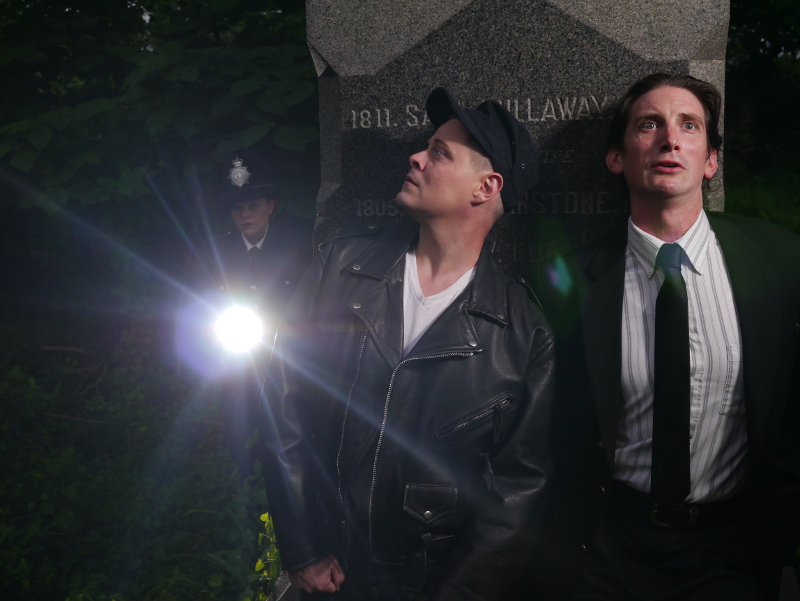
L-R: Officer MacDonald (Terence Gleeson) drills WPC Foster (Kyra Baker) on police procedure, as Joe (Doug Greene) and Brian (Bob Stineman, not pictured) keep out of sight, but are they out of earshot? Set design by Kevin Jordan, lighting by Andrew Cowles, photo by Kyle Cassidy.

Director and producer Liam Castellan assembled a team of crack shot designers who connected deeply with this piece. Set designer Kevin Jordan spent many years in the military and in England, and knows the science of sneaking up on people. Costume designer John Hodges loves period costuming and clever details, he brought form, function, fashion and fun together for maximum effect. Lighting designer Andrew Cowles knows “too late to be night and too early to be morning,” and the subtle changes that time period has.

Come join us.  You have six more chances to see this show. Click here for information about dates and times.

too late to be night, too early to be morning

So, here’s some of what we were up to at Mount Moriah Cemetery. Again, Kyra Baker as WPC Foster, Doug Greene as Joe Orton, Bob Stineman as Brian Epstein, all photos by Kyle Cassidy.

Photo by Kyle Cassidy

Photo by Kyle Cassidy.

Photo by Kyle Cassidy.
“do you know the story about the woman who had to be buried in the wall of the graveyard?”

150

Photo by Kyle Cassidy.
“It’s not that Imelda Marcos is evil, per se; it’s that she sent the entire frigging country after us.”

Only seven weeks to Opening Night.

Performance Summary:

Traveling Light by Lindsay Harris Friel, directed by Liam Castellan.

Produced by Liam’s Sofa Cushion Fortress, September 6-14, 2013

at the SkyBox at the Adrienne, 2030 Sansom St 3rd Floor, Philadelphia PA 19103

Ticket Prices:   $20 (tickets $10 on 9/6)

Tickets:     at the door or www.fringearts.com or call the Festival box office

More Info about the play and all the artists involved:    www.liamcastellan.com

the trickle-down of medicare spending cuts

Hey, guess what, guess what?

Today I was going to post more of the beautiful photos which Kyle Cassidy took for us, photos not only showing off the beauty of Mount Moriah Cemetery, but also the beauty of actors Kyra Baker, Doug Greene and Bob Stineman. Oh, your Monday could have been full of a visual cornucopia of symbolism debating the struggle between life, death, fecundity, sterility, society vs. chaos, Oh, the visual feast for your senses. You would have transcended your blue Monday and felt like you were in Midnight In The Garden Of Good and Evil, but more sexy and British.

In fact, today I was also going to take my hastily scribbled notes and start work on a new play, about hoarding and alternate dimensions. But you know what? Nope. Not today.

Today, my brother’s caregiver is running late. This is a trend with him. If caregivers for people with special needs were paid a living wage, then it would be worth their time to arrive on time. But no, today he’ll arrive “sometime late this afternoon,” and we really have no idea when we’ll see him. So, instead, my brother Ted and I are taking this opportunity to go clean my house.

Who could resist this face?

Ted can’t go without productive activity for about 15 minutes at a shot. When he gets bored, lonely, and feels like things are meaningless, he’ll wander around town talking too loudly to everyone he meets and demanding that they back his next production of the all-puppet Citizen Kane or something. which, in and of itself, is not necessarily a bad idea. in fact, some days I’d like to print up a whole bunch of T-shirts saying “My Caregiver Called Out Today, Now You Get To Entertain me,” find every single special needs person I know, get them all hopped up on M&Ms and Red Bull, and let them wander singing all over the Capitol building until someone steps up funding for people with mental disabilities, so they can have structured care and meaningful activity.

But, obviously, I must be nuts to think such a thing might be a good idea. Better that mentally disabled people should just be heavily medicated and left to watch tv all day, right?

Thanks, Harrisburg!

P.S. Ted says, “Oh my God. I think that’s gonna start some shit. You should post that.”

Life Peak Experiences and Collaboration

I promise, this isn’t going to turn into The Traveling Light Blog. Really, it isn’t.  I really do have other things to write about besides this. But, when life hands you Good Collaboration, you shout it from the mountaintops as much as possible, as well as wrap it up in cool cotton blankets and feed it nice things and take good care of it.

Yesterday afternoon, the cast (or, three-fourths, anyway; Kyra, Doug and Bob), the director and producer (Liam) and photographer and man-about-town Kyle Cassidy packed into the back of Toshiro Mifune (our tough, versatile and quiet Honda CRV) for a drive through the back alleys of South Philly, Grays Ferry, West Philadelphia, and finally, beautiful Mount Moriah Cemetery, for a photo shoot.

Mount Moriah Cemetery.

Mount Moriah Cemetery  is one of those things that everyone should know about, but when you go there, you want it to be kept a secret and only invite your few close friends who will be inspired with the same wonder and respect you do.  It inhabits a dreamlike between-space: its ownership is currently legally undetermined, it provides burial space to all faiths, its monuments are of many different aesthetic styles, and it’s wild and cultivated at the same time. The Friends of Mount Moriah Cemetery have established a volunteer committee, responsible for cleaning, gardening and care. However, its 200 acres and decades of neglect can’t be fixed overnight, so despite its accessibility it still has some parts where the wilderness rules.

The forecast called for a 70% chance of rain, so Liam and I brought a total of six umbrellas, to be sure that we wouldn’t need them. It worked.  The sky was just cloudy enough to give us diffuse light, keep the temperature not unbearable, and give the sky some rich color.

Here we see Kyle in rare jungle footage, as he prepares for his leading role in "Anacondonado IV."
Here we see Kyle in rare jungle footage, as he prepares for his leading role in “Anacondonado IV.”

Kyle specializes in journalistic photography, portraits, and fast improvisation. I’ve participated in one of his photography workshops, and he is extremely good at taking what’s available in a space and using it to great effect. He’s efficient as heck and carries around a positive attitude and sense of humor that is contagious.

So, we turned off of the road and the sight of a lush green hill dotted with stones, punctuated with columns and framed by mausoleums (mausoleii?) made us all squeal like teenaged Goth chicks at a 2 for 1 sale on black lace fingerless gloves.

LINDSAY: I don’t know, you guys, is this grave-y enough?

BOB: Is this grave-y enough?

I turned the car onto the least-beaten path, and then again, and within a minute or so, we were surrounded by Mid-Atlantic Jungle.

Memento Vitae.

On what must have once been brick platforms, rising to either side of the path, were clusters of rich green forest, and a vine-embraced tree that was twisted in the way trees will when their roots defy stone and their branches combat for light. It made a canopy around a granite memorial column from probably the late-Victorian era, and we said, “Yep, that’s it.”

You know you’re making risky art when you’re changing your clothes by the side of a car, using a window for a mirror and someone is offering you bug repellent.  The lantern I’d brought was deemed not period correct (I agreed, but it was the closest thing I could find), so Kyle made some magic happen and slid an electronic device up Kyra’s sleeve, and voila: the illusion of a period-currect flashlight.

Behind The Scenes shot of the shoot.
Liam Castellan, director, producer, and all-around git-er-done guy.

We played around the monuments for a while and Kyle took pictures, Liam was the Cheez-Itz powered voice activated light stand, and it was a lovely evening in the land of the dead.

and then we packed it up, and went home to brick boxes in which people live.

I don’t think there’s anything better than having good collaborators.  There’s a quote about writing, often attributed to Dorothy Parker, which goes, “I don’t like writing, I love having written.” The first draft, and second and third, are always a bear, a tiring process of grunt work, made worse because it’s lonely. But, when you get together with creative collaborators and actually do something with what you’ve written, and they bring their own ideas and resources to the project, that’s the real reason that I write.

"Make this mistake with me."
“Make this mistake with me.”

TL:DR; Another life peak experience. Coming soon: Real Photos!

Website Powered by WordPress.com.

Up ↑